Foundations of Organizational Behavior (OB)
Organizational Behavior (OB) is built on fundamental principles that define the nature of people and organizations. These principles emphasize that every individual is unique, behavior is influenced by multiple factors, and organizations function as dynamic social systems.
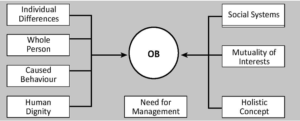 Foundations of OB
Source: Aswathappa (2017, 8)
Nature of People
- Individual Differences: No two people are alike; differences in personality, intelligence, and attitudes require tailored management approaches.
- Whole Person: Employees bring not just skills but also emotions, backgrounds, and social influences, which must be acknowledged in the workplace.
- Caused Human Behavior: Behavior is not random but shaped by personal and environmental factors. Managers must identify root causes behind actions.
- Human Dignity: Employees seek both material rewards and dignity at work. Respect and ethical treatment foster motivation and commitment.
Nature of Organization
- Social Systems: Organizations are dynamic social systems where individuals interact based on formal and informal structures, influencing each other’s behavior.
- Mutuality of Interest: Organizations need employees to achieve goals, while employees rely on organizations for growth and opportunities. This creates a reciprocal relationship.
- Holistic Concept: OB considers individuals, groups, and organizations as interconnected systems, requiring an integrated approach to managing people and work environments.
By understanding these concepts, organizations can effectively manage human behavior, promote a positive workplace culture, and align individual and organizational goals for success.
 Learning Often happens in the classroom, but it doesn’t have to.